Blue Cash Preferred from Amex
$95/yr
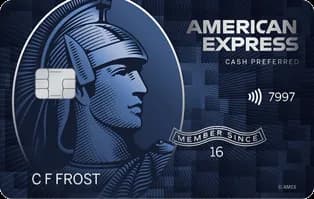
American Express
Blue Cash Preferred from Amex
4.5
(1,432 reviews)cashback
Reviewed by CardCompare Editorial Board
|CFP-reviewed|Updated April 2026The best card for grocery shoppers with 6% back at U.S. supermarkets.
Annual Fee
$95 (waived first year)
Purchase APR
19.24% – 29.99%
Rewards
1% base rate
Sign-Up Bonus
$250 value
Credit Score
Good (670-749)
Foreign Txn Fee
2.7%
Who Should Get This Card
The Blue Cash Preferred from Amex is best suited for established credit users who families spending heavily on groceries. The $95 annual fee pays for itself if you spend $9,500+/year on this card.
This card is great if you…
- 6% at supermarkets is industry-leading
- 6% on streaming
- Annual fee waived first year
- Families spending heavily on groceries
Consider another card if you…
- $95 annual fee after year 1
- 6% grocery cap at $6,000/year
- Not accepted everywhere (Amex)
Rewards Breakdown
6% groceries & streaming, 3% transit & gas, 1% everything else
| Category | Rate |
|---|---|
| U.S. Supermarkets(The highest-earning grocery card in America: 6% cash back at US supermarkets up to 6,000 dollars per year then 1%, plus 6% on US streaming subscriptions and 3% on transit and gas stations. Households spending 300-plus dollars monthly at the grocery store easily justify the 95-dollar annual fee through grocery rewards alone.) | 6% |
| Streaming | 6% |
| Transit | 3% |
| Gas Stations | 3% |
| Everything else | 1% |
Rewards Distribution
6%
top rate
U.S. Supermarkets6%32%
Streaming6%32%
Transit3%16%
Gas Stations3%16%
Everything else1%5%
Sign-Up Bonus
$250 after spending $3,000 in 6 months
Near Historic LowConsider waiting
Low: $250Avg: $300High: $350
Current
$250
Bonus History
23
24
24
26
Fees & APR
| Annual Fee | $95 (waived first year) |
| Purchase APR | 19.24% – 29.99% |
| Intro APR (Purchases) | 0% for 12 months |
| Intro APR (Balance Transfer) | 0% for 12 months |
| Balance Transfer Fee | 3% |
| Foreign Transaction Fee | 2.7% |
| Late Fee | Up to $40 |
Pros & Cons
6% at supermarkets is industry-leading
6% on streaming
Annual fee waived first year
Intro APR offer
$95 annual fee after year 1
6% grocery cap at $6,000/year
Not accepted everywhere (Amex)
The Bottom Line
The Good: The Blue Cash Preferred from Amex stands out for its 6% at supermarkets is industry-leading. The welcome bonus worth $250 adds significant first-year value.
The Not So Good: $95 annual fee after year 1. The $95 annual fee means you need to use the card actively to justify the cost.
Our Verdict: With an editor score of 8/10, the Blue Cash Preferred from Amex is one of our top-rated cards in its category. Make sure you'll earn at least $95 in value annually to justify the fee.
Frequently Asked Questions
What is the annual fee for the Blue Cash Preferred from Amex?▾
The Blue Cash Preferred from Amex has a $95 annual fee, waived for the first year. Consider whether the rewards and perks you'll use offset this cost.
What is the sign-up bonus for the Blue Cash Preferred from Amex?▾
The Blue Cash Preferred from Amex currently offers a sign-up bonus worth approximately $250. $250 after spending $3,000 in 6 months Terms apply — always verify the current offer directly with the issuer.
How do the rewards work on the Blue Cash Preferred from Amex?▾
The Blue Cash Preferred from Amex earns 1% on all purchases, and up to 6% in select bonus categories. Rewards are earned as cash back credited to your statement.
What credit score do I need for the Blue Cash Preferred from Amex?▾
The Blue Cash Preferred from Amex is recommended for applicants with good (670-749) credit. Approval is not guaranteed and depends on your full credit profile.
Does the Blue Cash Preferred from Amex charge a foreign transaction fee?▾
Yes, the Blue Cash Preferred from Amex charges a 2.7% foreign transaction fee on purchases processed outside the U.S.
What is the APR on the Blue Cash Preferred from Amex?▾
The Blue Cash Preferred from Amex has a variable purchase APR of 19.24% – 29.99%, with a 0% intro APR for the first 12 months. If you carry a balance, interest charges can quickly outweigh any rewards earned.
Who is the Blue Cash Preferred from Amex best for?▾
The Blue Cash Preferred from Amex is best for Families spending heavily on groceries. A key advantage: 6% at supermarkets is industry-leading.
Annual Fee Break-Even
$1,000/mo
$100/mo$5,000/mo
Annual rewards earned: $120Annual fee: $95
Card pays for itself! You earn $25 more than the annual fee at this spend level.
Based on 1% base rewards rate. Bonus category spending may reduce your break-even point.
Expert Review
By Marcus Rivera · 8 min read · Updated 2026-02-15
Who Is the Blue Cash Preferred Best For?
The Amex Blue Cash Preferred is the cash back card for families who spend big at the supermarket. At 6% back at U.S. supermarkets (on up to $6,000/year), 6% on select U.S. streaming subscriptions, 3% at U.S. gas stations, and 3% on transit, it's laser-focused on the spending categories that matter most to households. If you spend $500+/month on groceries, this card pays for its $95 annual fee many times over.
Grocery Rewards Math
At $500/month in groceries, you earn $360/year at the 6% rate. Subtract the $95 fee, and you net $265 in pure profit from groceries alone — before counting gas, streaming, and transit rewards. At $1,000/month (the $6,000 cap spread over 6 months), you earn $360 in the first half and still earn 1% on grocery purchases above the cap.
The 6% streaming benefit covers Netflix, Disney+, Hulu, HBO Max, Spotify, Apple Music, and more — easily worth $20-30/year for most households. Combined with 3% at gas stations and transit, a typical family earning $100/month on bonus categories nets over $1,000/year in rewards.
Supermarket ≠ Walmart or Target
The 6% grocery rate applies at U.S. supermarkets only. Walmart, Target, and wholesale clubs (Costco, Sam's Club, BJ's) are excluded. If your primary grocery shopping is at Walmart or Target, this card loses its main advantage. Stores like Kroger, Publix, Safeway, Whole Foods, Trader Joe's, and Aldi all qualify.
How It Compares
vs. Amex Gold: The Gold earns 4x MR points at supermarkets (worth roughly 4-8% depending on redemption) with a $25,000 cap, plus 4x at restaurants. The BCP earns 6% at supermarkets with a lower $6,000 cap and no restaurant bonus. For families spending under $6,000/year on groceries who want cash back (not points), the BCP is simpler. For higher spenders or those who want transferable points, the Gold wins.
The Bottom Line
The Blue Cash Preferred is the best pure cash back card for grocery shoppers. The 6% rate at supermarkets is unmatched, and the $95 fee is easily justified by anyone spending $250+/month on groceries. For families, it's essentially a $300+/year raise on spending you'd do anyway.
Customer Reviews
4.5
1,432 reviews
5
1
4
1
3
0
2
0
1
0
KA
Karen A.Verified CardholderNov 22, 2026
Best grocery card hands down
6% at supermarkets is unbeatable. Our family spends about $500/month on groceries, so we earn $360/year just on that. The $95 fee pays for itself easily.
PV
Paul V.Verified CardholderSep 30, 2026
Great if you max the categories
The 6% grocery and streaming categories are fantastic. Just note the $6,000 annual cap on groceries — after that it drops to 1%.
Was this page helpful?