Best Student Credit Cards (April 2026)
Build credit while you're in school
Starting your credit journey? These student-friendly cards are designed with lower approval requirements and offer rewards on the spending categories that matter most to students — like dining, groceries, and streaming.
Reviewed by CardCompare Editorial Board
|CFP-reviewed|Updated April 20265 cards foundUpdated January 2026
Credit Card
Annual Fee
Rewards Rate
Intro Offer
BEST STUDENT CREDIT CARDS
Discover
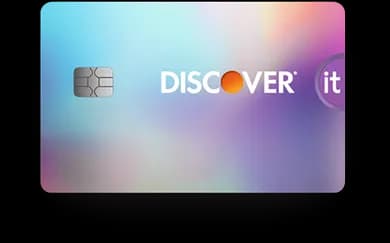
Discover it Student Cash Back
4.5
Best for: Students wanting maximum first-year rewards
$0
1%–5%
cashback
$150 value
Annual Fee
$0
Rewards
1%–5%
Intro Offer
$150 value
Capital One
Capital One Quicksilver Student Cash Rewards
4.4
Best for: Students studying abroad or international students
$0
1.5%
cashback
$50 value
Annual Fee
$0
Rewards
1.5%
Intro Offer
$50 value
Discover
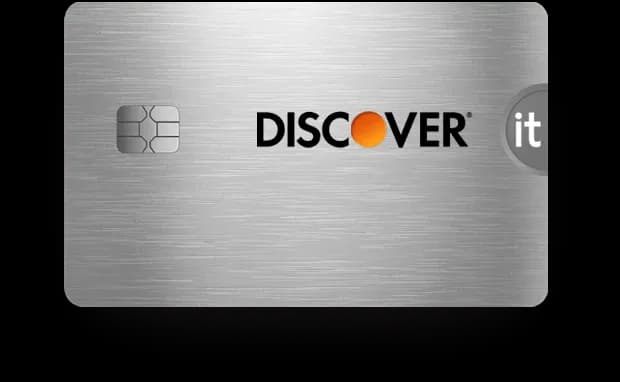
Discover it Student Chrome
4.3
Best for: College students building credit
$0
1%–2%
cashback
$100 value
Annual Fee
$0
Rewards
1%–2%
Intro Offer
$100 value
Chase
Chase Freedom Rise
4.2
Best for: College students starting their credit journey
$0
1.5%
cashback
$25 value
Annual Fee
$0
Rewards
1.5%
Intro Offer
$25 value
Not sure which card is right for you?
Answer 5 quick questions — we'll match you with your best card.
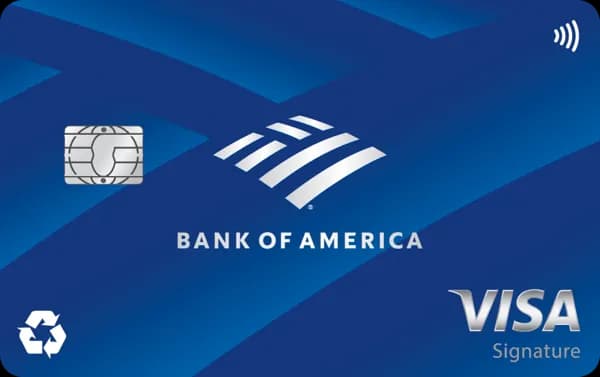
Bank of America
Bank of America Travel Rewards for Students
4.1
Best for: Students who travel internationally
$0
1.5x
points
$250 value
Annual Fee
$0
Rewards
1.5x
Intro Offer
$250 value
Comparing the best cards
| Credit Card | Best For | Annual Fee | Rewards | Intro Offer | Rating |
|---|---|---|---|---|---|
| Discover it Student Cash Back Discover | Students wanting maximum first-year rewards | $0 | 1%–5% | $150 value | 4.5 |
| Capital One Quicksilver Student Cash Rewards Capital One | Students studying abroad or international students | $0 | 1.5% | $50 value | 4.4 |
| Discover it Student Chrome Discover | College students building credit | $0 | 1%–2% | $100 value | 4.3 |
| Chase Freedom Rise Chase | College students starting their credit journey | $0 | 1.5% | $25 value | 4.2 |
| Bank of America Travel Rewards for Students Bank of America | Students who travel internationally | $0 | 1.5x | $250 value | 4.1 |
How We Ranked These Cards
Student cards are ranked on approval accessibility (30%), rewards for student spending patterns (25%), credit-building features like free FICO score access and credit line increases (20%), no/low annual fee (15%), and graduation path to a premium product (10%).
We model student spending at $800/month: $200 dining, $100 groceries, $50 gas, $50 streaming, and $400 other. Rewards are valued at face value since students rarely optimize transfer partners. Cards that automatically review for credit line increases and offer upgrade paths score higher.
What You Need to Know
Building credit from scratch is one of the most impactful financial decisions a college student can make, yet most students either ignore it entirely or approach it with harmful misconceptions. A credit card opened at age 18 and managed responsibly becomes a 10+ year account by the time you're buying a home — and that account age is the single hardest credit factor to fast-track later. Students who start building credit early graduate with scores in the 720-760 range, while peers who wait until after college start from scratch at 25-28.
Student credit cards exist because issuers want your long-term loyalty. Banks take a calculated loss on student cards (low spending, thin margins) because data shows 60-70% of consumers keep their first credit card for 10+ years. This is why Discover, Chase, Bank of America, and Capital One offer genuine rewards on student products — they're investing in your future relationship. The Discover it Student Chrome earns 2% at gas stations and restaurants, while the Chase Freedom Student earns 1% on everything with a monthly bonus for on-time payments.
The credit score impact of a student card is immediate and significant. After just one month of reported on-time payment, you'll have a FICO score (typically starting in the 630-680 range). After six months of responsible use — keeping utilization under 30%, never missing a payment — most students see scores above 700. This trajectory matters because your credit score affects apartment applications, car insurance rates, and even some employment background checks, not just future credit card approvals.
Graduation paths are the hidden differentiator between student cards. The best student cards automatically upgrade to premium products after 12-24 months of responsible use. The Discover it Student graduates to a standard Discover it card (same rewards, higher limit). Bank of America student cards upgrade to full Cash Rewards cards. Chase Freedom Student converts to Freedom Unlimited. These upgrades happen without a new application or hard inquiry, preserving your credit age while unlocking better rewards and higher limits.
The biggest risk for students isn't rejection — it's misuse. Student card APRs range from 20-28%, and carrying even a $300 balance for a year costs $60-$84 in interest. The optimal student card strategy is ruthlessly simple: put one or two recurring expenses (streaming subscription, gas fill-up) on autopay, pay the full balance every month, and don't use the card for impulse purchases. This approach builds excellent credit with zero interest cost and minimal temptation to overspend.
Expert Tips
Start with one card and use it responsibly for 6+ months
Your first credit card builds the foundation of your credit history. Use it for 1-2 recurring purchases, set up autopay for the full balance, and keep utilization under 30%. After 6 months of on-time payments, your score will grow significantly.
The Discover it Student is hard to beat for first-year value
Discover matches all cash back in year one, effectively doubling the 5% rotating categories to 10% and the 1% base to 2%. No other student card offers this. Plus, Discover has no foreign transaction fee and gives free FICO scores.
Avoid carrying a balance — even small amounts matter
Student card APRs run 20-28%. A $500 balance carried for 12 months costs $100-140 in interest — wiping out any rewards earned. Always pay the full statement balance. If you can't pay in full, pay more than the minimum to reduce interest charges.
Common Mistakes to Avoid
Waiting until after graduation to start building credit
Every year you delay costs you a year of credit history that you can never get back. A card opened freshman year gives you 4+ years of history by graduation — enough for a 740+ score. Waiting until 25 means starting from zero when you need credit for an apartment, car loan, or mortgage.
Maxing out a low credit limit and tanking utilization ratio
Student cards often start with $500-$1,000 limits. Putting $400 on a $500 limit card means 80% utilization — a major score killer even if you pay in full. Keep spending under 30% of your limit ($150 on a $500 card), or make mid-cycle payments to keep the reported balance low.
Opening multiple cards too quickly to 'build credit faster'
Each application triggers a hard inquiry that temporarily lowers your score. Opening 3 cards in your first semester drops your average account age and signals risk to lenders. Start with one card, use it responsibly for 12 months, then consider a second card only if you have a specific need.
Frequently Asked Questions
Can I get a credit card as a student with no credit history?▾
Yes. Student credit cards are specifically designed for applicants with no credit history. Issuers evaluate enrollment status, income (including part-time jobs, financial aid, and parental support), and don't require an established credit score. The Discover it Student and Chase Freedom Student are popular first cards.
What credit limit will I get as a student?▾
Most students start with a $500-1,500 limit. This increases over time as you demonstrate responsible use. After 6-12 months of on-time payments, you can request a credit line increase. Some issuers automatically review your account for increases every 6 months.
Should I get a student card or a secured card?▾
If you're enrolled in college, a student card is usually better — no security deposit required, real rewards, and a clear graduation path. Secured cards are for those who can't qualify for any unsecured card, typically due to very thin credit files or past negative history.
More Best Card Lists
Travel Credit CardsCash Back Credit CardsCredit Cards for DiningNo Annual Fee Credit CardsRewards Credit CardsBalance Transfer CardsCards with No Foreign Transaction FeesBusiness Credit CardsSecured Credit CardsCredit Cards for Bad Credit0% APR Credit CardsCredit Cards for GasCredit Cards for GroceriesFlat-Rate Cash Back CardsPremium Credit CardsHotel Credit CardsAirline Credit CardsCredit Cards for MilitaryCredit Cards for FamiliesCredit Cards for Rent PaymentsCredit Cards for Subscriptions & StreamingLuxury Credit CardsCredit Cards for BeginnersCredit Cards for Online ShoppingCrypto & Fintech Credit CardsSmall Business Credit CardsCredit Cards for Bills & UtilitiesFirst Credit CardsHigh Credit Limit CardsCredit Cards for AmazonCredit Cards for CostcoCredit Cards for Self-EmployedCredit Card Sign-Up BonusesCredit Cards for International TravelCredit Cards for Excellent CreditCredit Cards for Good CreditCredit Cards for Fair CreditVisa Credit CardsMastercard Credit CardsAmerican Express CardsCredit Cards for U.S. NewcomersCredit Cards with Free FICO ScoreCredit Cards for Apple Pay & ContactlessMetal Credit CardsCredit Cards from Online Banks & FintechsCredit Cards with No Credit CheckInstant Approval Credit Cards