Best Credit Cards for Groceries (April 2026)
Maximize rewards on your grocery spending
Groceries are one of the biggest household expenses — the average American family spends over $5,000 per year at the supermarket. These cards turn that spending into serious rewards, with bonus rates of 3-6% at U.S. supermarkets.
Reviewed by CardCompare Editorial Board
|CFP-reviewed|Updated April 202619 cards foundUpdated February 2026
Credit Card
Annual Fee
Rewards Rate
Intro Offer
BEST CREDIT CARDS FOR GROCERIES

Chase
Chase Sapphire Preferred
4.7
Best for: Frequent travelers who dine out often
$95
1x–5x
points
$750 value
Annual Fee
$95
Rewards
1x–5x
Intro Offer
$750 value
Editor's Pick9/10 score
American Express
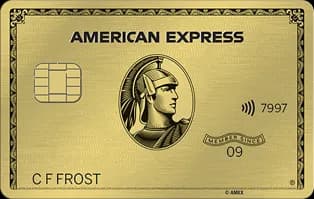
American Express Gold Card
4.6
Best for: Foodies and grocery shoppers
$250
1x–4x
points
$600 value
Annual Fee
$250
Rewards
1x–4x
Intro Offer
$600 value
Editor's Pick9/10 score
Citi
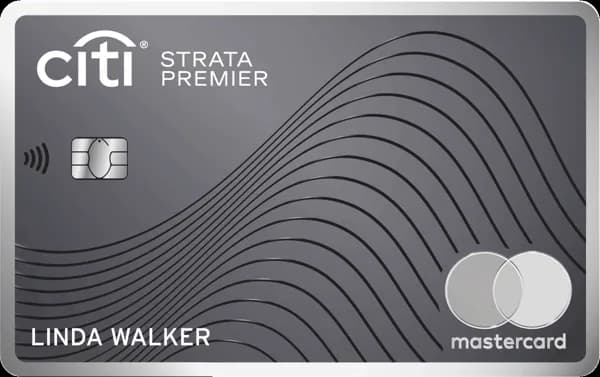
Citi Strata Premier Card
4.4
Best for: Travelers who want high hotel multipliers and flexible transfer partners
$95
1x–10x
points
$750 value
Annual Fee
$95
Rewards
1x–10x
Intro Offer
$750 value

Capital One
Capital One SavorOne
4.5
Best for: Dining and entertainment enthusiasts
$0
1%–3%
cashback
$200 value
Annual Fee
$0
Rewards
1%–3%
Intro Offer
$200 value
Not sure which card is right for you?
Answer 5 quick questions — we'll match you with your best card.
Citi
Citi Premier
4.3
Best for: Diverse spenders who want travel rewards
$95
1x–3x
points
$600 value
Annual Fee
$95
Rewards
1x–3x
Intro Offer
$600 value
American Express
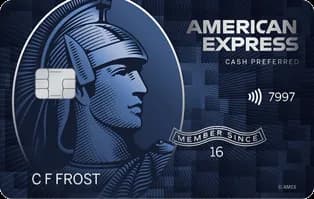
Blue Cash Preferred from Amex
4.5
Best for: Families spending heavily on groceries
$95
Waived 1st yr
1%–6%
cashback
$250 value
Annual Fee
$95
Rewards
1%–6%
Intro Offer
$250 value
American Express
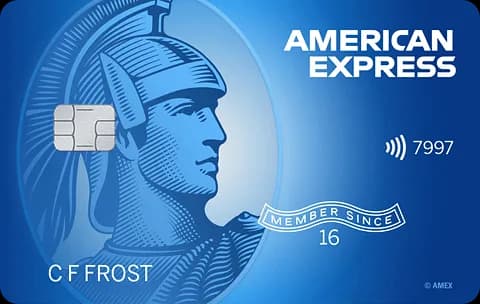
Blue Cash Everyday Card from American Express
4.4
Best for: Everyday household spending — groceries, gas, and online shopping
$0
1%–3%
cashback
$200 value
Annual Fee
$0
Rewards
1%–3%
Intro Offer
$200 value
U.S. Bank
U.S. Bank Altitude Go Visa Signature
4.3
Best for: Foodies who want high dining rewards without an annual fee
$0
1x–4x
points
$250 value
Annual Fee
$0
Rewards
1x–4x
Intro Offer
$250 value

U.S. Bank
U.S. Bank Altitude Connect Visa Signature
4.2
Best for: Travelers who value cell phone protection and streaming credits
$95
Waived 1st yr
1x–5x
points
$500 value
Annual Fee
$95
Rewards
1x–5x
Intro Offer
$500 value
American Express
Hilton Honors American Express Surpass Card
4.4
Best for: Regular Hilton guests who value Gold status perks
$150
3x–12x
points
$650 value
Annual Fee
$150
Rewards
3x–12x
Intro Offer
$650 value

American Express
Delta SkyMiles Platinum American Express Card
4.2
Best for: Frequent Delta flyers who travel with a companion
$350
1x–3x
miles
$900 value
Annual Fee
$350
Rewards
1x–3x
Intro Offer
$900 value

Bank of America
Bank of America Customized Cash Rewards
4.3
Best for: Bank of America customers who want category flexibility
$0
1%–3%
cashback
$200 value
Annual Fee
$0
Rewards
1%–3%
Intro Offer
$200 value
American Express
Delta SkyMiles Gold American Express
4.2
Best for: Frequent Delta Air Lines flyers
$150
Waived 1st yr
1x–2x
miles
$700 value
Annual Fee
$150
Rewards
1x–2x
Intro Offer
$700 value

Chase
Marriott Bonvoy Boundless
4.3
Best for: Regular Marriott hotel guests
$95
2x–6x
points
$450 value
Annual Fee
$95
Rewards
2x–6x
Intro Offer
$450 value
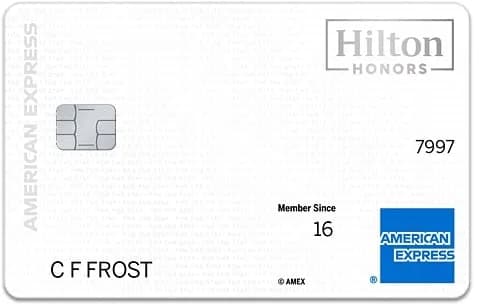
American Express
Hilton Honors American Express Card
4.2
Best for: Occasional Hilton guests who want no-fee hotel rewards
$0
3x–7x
points
$400 value
Annual Fee
$0
Rewards
3x–7x
Intro Offer
$400 value

Barclays
JetBlue Plus Card
4.1
Best for: Frequent JetBlue flyers
$99
1x–6x
points
$600 value
Annual Fee
$99
Rewards
1x–6x
Intro Offer
$600 value
Barclays
Wyndham Rewards Earner Plus Card
4
Best for: Budget travelers and Las Vegas visitors
$75
1x–6x
points
$540 value
Annual Fee
$75
Rewards
1x–6x
Intro Offer
$540 value
USAA
USAA Cashback Rewards Plus
4.2
Best for: Active-duty military and veterans who shop on base
$0
1%–5%
cashback
$200 value
Annual Fee
$0
Rewards
1%–5%
Intro Offer
$200 value
Gemini
Gemini Credit Card
3.7
Best for: People who want a real credit card that earns crypto
$0
1%–3%
mixed
$100 value
Annual Fee
$0
Rewards
1%–3%
Intro Offer
$100 value
Comparing the best cards
| Credit Card | Best For | Annual Fee | Rewards | Intro Offer | Rating |
|---|---|---|---|---|---|
| Chase Sapphire Preferred Chase | Frequent travelers who dine out often | $95 | 1x–5x | $750 value | 4.7 |
| American Express Gold Card American Express | Foodies and grocery shoppers | $250 | 1x–4x | $600 value | 4.6 |
| Citi Strata Premier Card Citi | Travelers who want high hotel multipliers and flexible transfer partners | $95 | 1x–10x | $750 value | 4.4 |
| Capital One SavorOne Capital One | Dining and entertainment enthusiasts | $0 | 1%–3% | $200 value | 4.5 |
| Citi Premier Citi | Diverse spenders who want travel rewards | $95 | 1x–3x | $600 value | 4.3 |
| Blue Cash Preferred from Amex American Express | Families spending heavily on groceries | $95(waived yr 1) | 1%–6% | $250 value | 4.5 |
| Blue Cash Everyday Card from American Express American Express | Everyday household spending — groceries, gas, and online shopping | $0 | 1%–3% | $200 value | 4.4 |
| U.S. Bank Altitude Go Visa Signature U.S. Bank | Foodies who want high dining rewards without an annual fee | $0 | 1x–4x | $250 value | 4.3 |
| U.S. Bank Altitude Connect Visa Signature U.S. Bank | Travelers who value cell phone protection and streaming credits | $95(waived yr 1) | 1x–5x | $500 value | 4.2 |
| Hilton Honors American Express Surpass Card American Express | Regular Hilton guests who value Gold status perks | $150 | 3x–12x | $650 value | 4.4 |
| Delta SkyMiles Platinum American Express Card American Express | Frequent Delta flyers who travel with a companion | $350 | 1x–3x | $900 value | 4.2 |
| Bank of America Customized Cash Rewards Bank of America | Bank of America customers who want category flexibility | $0 | 1%–3% | $200 value | 4.3 |
| Delta SkyMiles Gold American Express American Express | Frequent Delta Air Lines flyers | $150(waived yr 1) | 1x–2x | $700 value | 4.2 |
| Marriott Bonvoy Boundless Chase | Regular Marriott hotel guests | $95 | 2x–6x | $450 value | 4.3 |
| Hilton Honors American Express Card American Express | Occasional Hilton guests who want no-fee hotel rewards | $0 | 3x–7x | $400 value | 4.2 |
| JetBlue Plus Card Barclays | Frequent JetBlue flyers | $99 | 1x–6x | $600 value | 4.1 |
| Wyndham Rewards Earner Plus Card Barclays | Budget travelers and Las Vegas visitors | $75 | 1x–6x | $540 value | 4 |
| USAA Cashback Rewards Plus USAA | Active-duty military and veterans who shop on base | $0 | 1%–5% | $200 value | 4.2 |
| Gemini Credit Card Gemini | People who want a real credit card that earns crypto | $0 | 1%–3% | $100 value | 3.7 |
Head-to-Head Comparisons
Chase Sapphire Preferred vs American Express Gold Card
Winner: Chase Sapphire Preferred — Better overall value with lower fee and stronger travel rewards
American Express Gold Card vs Capital One SavorOne
Winner: Capital One SavorOne — Better value for most people thanks to $0 annual fee
Blue Cash Preferred from Amex vs Blue Cash Everyday Card from American Express
Winner: Blue Cash Preferred from Amex — Better value if grocery spending exceeds $3,200/year
American Express Gold Card vs Citi Strata Premier Card
Winner: Citi Strata Premier Card — Much lower annual fee with broader bonus categories
How We Ranked These Cards
Grocery cards are ranked on supermarket earning rate (35%), whether the bonus works at all grocery stores or only select chains (15%), annual earning cap — many cards cap bonus rewards at $6,000/year in grocery spending (15%), non-grocery categories (20%), and annual fee relative to grocery rewards (15%).
We model a household spending $600/month on groceries ($7,200/year), $300 on dining, and $1,100 on other purchases. The Amex Blue Cash Preferred earns 6% at US supermarkets up to $6,000/year ($360 back) minus its $95 annual fee = $265 net. The no-fee Blue Cash Everyday earns 3% ($216) with no fee — the Preferred wins for spenders above $265/month on groceries.
Important distinction: 'US supermarkets' excludes Walmart, Target, Costco, and Amazon Fresh on most Amex cards. These code as 'superstores' or 'wholesale clubs,' not 'supermarkets.' We clearly note which stores qualify for each card.
What You Need to Know
Grocery spending is the single largest recurring expense for most American households, averaging $600-1,000 per month for a family of four. This makes grocery rewards one of the highest-impact categories for credit card optimization — the difference between a 1% card and a 6% card on $800/month in groceries is $480 per year. Yet the grocery rewards landscape is riddled with confusing restrictions, spending caps, and merchant classification traps that can dramatically reduce your actual earnings.
The Amex Blue Cash Preferred dominates grocery rewards at 6% cash back on US supermarkets, but the $6,000 annual spending cap means rewards drop to 1% after you spend $500/month at supermarkets. For a family spending $800/month, $6,000 gets the 6% rate ($360/year) and the remaining $3,600 earns 1% ($36/year), for a total of $396 minus the $95 annual fee = $301 net. The no-fee Blue Cash Everyday at 3% on the same $9,600 earns $288 — making the Preferred worth only $13 more for that spending level. Calculate your actual supermarket spending (excluding Walmart, Target, and Costco) before committing to the Preferred.
Merchant classification is the biggest gotcha in grocery rewards. When you swipe your card, the merchant's category code (MCC) determines your reward rate — not what you actually bought. Walmart Supercenters, Target, Costco, and Sam's Club code as "superstores" or "wholesale clubs," not "supermarkets." Amazon Fresh and Whole Foods code differently depending on the card. If you do 60% of grocery shopping at Walmart or Costco, a grocery-specific card underperforms compared to a flat-rate 2% card or the Costco Anywhere Visa (2% at Costco).
The gift card strategy at supermarkets is a well-known optimization that multiplies your effective rewards rate. Buying a $200 Amazon gift card at your local Kroger earns 6% ($12) with the Blue Cash Preferred — effectively earning 6% on Amazon purchases instead of the typical 1-2%. Similarly, restaurant gift cards, gas gift cards, and even Visa/Mastercard gift cards purchased at supermarkets earn the elevated rate. This is completely legitimate but requires organization and discipline — don't buy gift cards you won't use, and be aware that some issuers monitor for excessive gift card purchases.
Expert Tips
The Amex Blue Cash Preferred is the grocery card to beat
6% cash back at US supermarkets (up to $6,000/year) puts $360/year back in your pocket. After the $95 annual fee, you net $265/year — better than any other grocery card. The break-even point is about $265/month in grocery spending. Below that, the no-fee Blue Cash Everyday at 3% is the smarter choice.
Costco and Walmart do not count as supermarkets on most cards
This is the biggest gotcha in grocery rewards. Costco, Walmart, Target, Sam's Club, and Amazon Fresh typically code as 'wholesale clubs' or 'superstores' — not 'supermarkets.' If you do most grocery shopping at these stores, look for cards that earn bonus rewards on wholesale clubs instead.
Buy gift cards at supermarkets to multiply your rewards
Most supermarket bonus categories apply to everything purchased in-store, including gift cards. Buying a $100 Amazon gift card at your supermarket earns 6% ($6) with the Amex Blue Cash Preferred. This effectively converts non-bonus spending into 6% rewards. Just do not overextend your budget.
Common Mistakes to Avoid
Assuming Walmart and Costco trigger grocery bonus categories
Walmart, Target, Costco, Sam's Club, and Amazon Fresh typically code as 'superstores' or 'wholesale clubs' — not 'supermarkets.' The Amex Blue Cash Preferred's 6% rate does not apply at these stores. If you split grocery shopping between Kroger and Walmart, only Kroger purchases earn the bonus rate. Check your card's terms for which merchant categories qualify.
Ignoring the annual spending cap on grocery cards
The Amex Blue Cash Preferred caps 6% grocery rewards at $6,000/year ($500/month), then drops to 1%. If you spend $1,000/month at supermarkets, half your spending earns only 1%. For heavy grocery spenders, combining the Blue Cash Preferred with the Amex Gold (4x at supermarkets with no cap) or using a flat-rate 2% card for overflow spending captures more total rewards.
Paying the annual fee when your grocery spending is too low
The Amex Blue Cash Preferred costs $95/year. At 6% back, you need to spend $264/month at US supermarkets just to break even compared to the free Blue Cash Everyday at 3%. If your household spends under $250/month at qualifying supermarkets, the no-fee card actually puts more money in your pocket after accounting for the annual fee.
Frequently Asked Questions
What credit card gives the most cash back on groceries?▾
The Amex Blue Cash Preferred earns 6% at US supermarkets (up to $6,000/year in purchases, then 1%), making it the highest flat grocery earning rate available. For no-annual-fee options, the Amex Blue Cash Everyday earns 3% at supermarkets. The Capital One SavorOne earns 3% on groceries with no cap and no annual fee.
Do Walmart and Costco count as grocery stores for credit card rewards?▾
No, in most cases. Walmart, Costco, Target, and Sam's Club are classified as 'superstores' or 'wholesale clubs' by payment networks, not 'supermarkets.' This means they do not trigger grocery bonus categories on most credit cards. For Costco specifically, the Costco Anywhere Visa earns 2% at Costco and 3% at restaurants and eligible travel.
Is the Amex Blue Cash Preferred worth the $95 annual fee for groceries?▾
If you spend more than $265/month at US supermarkets, yes. At $600/month in grocery spending, the Preferred earns $360/year in grocery cash back minus $95 fee = $265 net. The no-fee Blue Cash Everyday earns $216 at the same spend level. The Preferred wins by $49 at $600/month and the gap grows with higher spending.
More Best Card Lists
Travel Credit CardsCash Back Credit CardsCredit Cards for DiningNo Annual Fee Credit CardsRewards Credit CardsBalance Transfer CardsStudent Credit CardsCards with No Foreign Transaction FeesBusiness Credit CardsSecured Credit CardsCredit Cards for Bad Credit0% APR Credit CardsCredit Cards for GasFlat-Rate Cash Back CardsPremium Credit CardsHotel Credit CardsAirline Credit CardsCredit Cards for MilitaryCredit Cards for FamiliesCredit Cards for Rent PaymentsCredit Cards for Subscriptions & StreamingLuxury Credit CardsCredit Cards for BeginnersCredit Cards for Online ShoppingCrypto & Fintech Credit CardsSmall Business Credit CardsCredit Cards for Bills & UtilitiesFirst Credit CardsHigh Credit Limit CardsCredit Cards for AmazonCredit Cards for CostcoCredit Cards for Self-EmployedCredit Card Sign-Up BonusesCredit Cards for International TravelCredit Cards for Excellent CreditCredit Cards for Good CreditCredit Cards for Fair CreditVisa Credit CardsMastercard Credit CardsAmerican Express CardsCredit Cards for U.S. NewcomersCredit Cards with Free FICO ScoreCredit Cards for Apple Pay & ContactlessMetal Credit CardsCredit Cards from Online Banks & FintechsCredit Cards with No Credit CheckInstant Approval Credit Cards