Blue Cash Preferred from Amex vs Blue Cash Everyday Card from American Express
Head-to-head comparison of every feature, fee, and perk
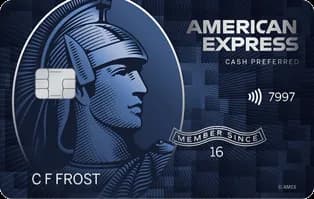
VS
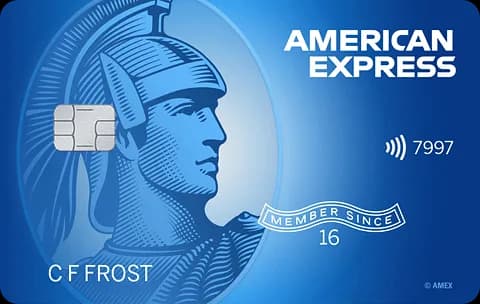
At a Glance
Annual Fee
$95 (waived first year)
vs
No annual fee
Base Rewards
1%
vs
1%
Sign-Up Bonus
$250
vs
$200
Editor Score
8/10
vs
8/10
Detailed Comparison
| Category wins | 5/6 | 1/6 |
| Fees & APR | ||
| Annual Fee | $95 (waived first year)✗ Highest | No annual fee★ Lowest |
| Purchase APR | 19.24% – 29.99% | 19.24% – 29.99% |
| Intro APR (Purchases) | 0% · 12 mo | 0% · 15 mo |
| Intro APR (Balance Transfer) | 0% · 12 mo | 0% · 15 mo |
| Foreign Txn Fee | 2.7%★ Lowest | 2.7% |
| Balance Transfer Fee | 3% | 3% |
| Rewards | ||
| Rewards Type | Cashback | Cashback |
| Base Rewards Rate | 1%★ Highest | 1% |
| Bonus Categories | 6% U.S. Supermarkets · 6% Streaming · 3% Transit | 3% U.S. Supermarkets · 3% U.S. Online Retail Purchases · 3% U.S. Gas Stations |
| Sign-Up Bonus | $250 value★ Highest | $200 value✗ Lowest |
| Eligibility | ||
| Credit Score | Good (670-749) | Good (670-749) |
| Network | American Express | American Express |
| At a Glance | ||
| Best For | Families spending heavily on groceries | Everyday household spending — groceries, gas, and online shopping |
| Ratings | ||
| User Rating | 4.5 / 5★ Highest | 4.4 / 5✗ Lowest |
| Editor Score | 8 / 10★ Highest | 8 / 10 |
| Apply Now | Apply | Apply |
| Full Review | View details → | View details → |
| Pros & Cons | ||
| Pros |
|
|
| Cons |
|
|
Our Verdict
Same family, different strategy. The Preferred ($95/yr) earns 6% at U.S. supermarkets (up to $6K/yr), 6% on streaming, and 3% on transit. The Everyday ($0/yr) earns 3% at supermarkets (up to $6K/yr) and 2% at gas stations. If you spend $3,200+/year on groceries, the Preferred's extra 3% earns back the $95 fee. Below that, the no-fee Everyday is the better deal. Do the grocery math before choosing.
Winner: Blue Cash Preferred from Amex
Better value if grocery spending exceeds $3,200/year
In-Depth Analysis
Grocery Rewards: 6% vs 3% and the Cap Question
The Blue Cash Preferred earns 6% cash back at U.S. supermarkets on the first $6,000 in annual spending, then drops to 1%. That $6,000 cap yields a maximum of $360 in annual grocery cash back. The Blue Cash Everyday earns 3% at U.S. supermarkets with no stated annual cap on the bonus rate — though Amex reserves the right to limit it. For a household spending $500/month on groceries ($6,000/year), the BCP earns $360 vs the BCE's $180 — a $180 difference. But with the BCP's $95 annual fee, the net advantage shrinks to just $85. You need to spend roughly $266/month on groceries ($3,167/year) for the BCP's higher rate to offset its fee.
The Annual Fee Breakeven Math
The BCP charges $95/year while the BCE charges $0. To justify the BCP's fee, you need enough spending in its higher-earning categories to generate $95 more in cash back than the BCE. At supermarkets (6% vs 3%), you break even at about $3,167 in annual grocery spending — roughly $264/month. The BCP also earns 6% on select U.S. streaming subscriptions vs the BCE's 3%, and 3% at U.S. gas stations vs the BCE's 2%. Adding $150/month in streaming and $200/month in gas to the equation, the breakeven grocery spend drops to about $200/month. For households spending above these thresholds, the BCP is the clear winner; for lighter spenders, the BCE's $0 fee keeps more money in your pocket.
Streaming, Transit & Gas Categories
The BCP earns 6% on select U.S. streaming subscriptions (Netflix, Disney+, Hulu, HBO Max, Spotify, and more) and 3% at U.S. gas stations and on select transit including ride-sharing services, tolls, and parking. The BCE earns 3% on the same streaming services and 2% at U.S. gas stations, with no transit bonus. If your household spends $50/month on streaming, the BCP earns $36/year vs the BCE's $18 — an $18 difference. On $200/month in gas, the BCP earns $72/year vs the BCE's $48. These secondary categories add $42/year in additional value for the BCP, chipping further into the $95 fee gap.
Intro APR & Balance Transfer
Both cards offer 0% intro APR periods that make them attractive for financing large purchases. The BCP typically offers 0% intro APR for 12 months on purchases and balance transfers, while the BCE often matches with 0% for 15 months on purchases and balance transfers. If you're planning a balance transfer or a major purchase you want to pay off interest-free, the BCE's longer 0% window gives you more breathing room — and you're not paying the $95 annual fee during that period. For pure balance transfer purposes, the BCE is the more cost-effective choice.
Which Amex Blue Cash Card Is Right for You?
Get the Blue Cash Preferred if your household spends $300+ per month on groceries, you subscribe to multiple streaming services, and you buy gas regularly — the 6% grocery rate and 6% streaming rate will easily recoup the $95 annual fee and then some. Get the Blue Cash Everyday if your grocery spending is under $250/month, you want a strong no-annual-fee cash back card for moderate supermarket and streaming spending, or you're looking for a longer intro APR period. Both cards are Amex-issued, so you can start with the BCE and product-change to the BCP later if your grocery spending increases — no new hard inquiry required.
Unlock Full Comparison Report
Share to unlock
Related Comparisons
Common Questions
Which is better: Blue Cash Preferred from Amex or Blue Cash Everyday Card from American Express?
It depends on your spending habits. The Blue Cash Preferred from Amex has a $95 annual fee and earns 1% base rewards. The Blue Cash Everyday Card from American Express has no annual fee and earns 1% base rewards. Compare their bonus categories above to see which aligns better with your spending.
What is the annual fee difference between Blue Cash Preferred from Amex and Blue Cash Everyday Card from American Express?
The Blue Cash Preferred from Amex has a $95 annual fee while the Blue Cash Everyday Card from American Express has no annual fee. The Blue Cash Preferred from Amex costs $95 more per year, so it needs to deliver that much extra value in rewards and perks to justify the difference.
Can I have both the Blue Cash Preferred from Amex and Blue Cash Everyday Card from American Express?
Both cards are issued by American Express, so check their application rules. Some issuers limit the number of cards you can hold simultaneously or have waiting periods between applications.