Best Business Credit Cards (April 2026)
Top cards for business owners and freelancers
The right business credit card can earn serious rewards on your company's spending while giving you tools to manage expenses, issue employee cards, and track purchases. We've ranked these cards on rewards rates, business-specific perks, sign-up bonuses, and value for small business owners.
Reviewed by CardCompare Editorial Board
|CFP-reviewed|Updated April 202615 cards foundUpdated March 2026
Credit Card
Annual Fee
Rewards Rate
Intro Offer
BEST BUSINESS CREDIT CARDS
Chase
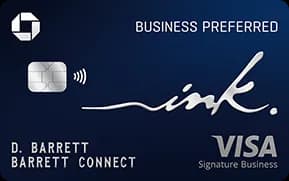
Chase Ink Business Preferred
4.7
Best for: Growing businesses with travel and advertising expenses
$95
1x–3x
points
$1,125 value
Annual Fee
$95
Rewards
1x–3x
Intro Offer
$1,125 value
Editor's Pick9/10 score
Chase
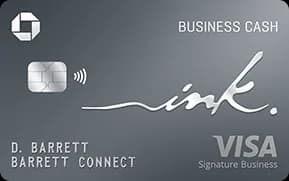
Chase Ink Business Cash
4.6
Best for: Small businesses with high office supply & telecom spend
$0
1%–5%
cashback
$750 value
Annual Fee
$0
Rewards
1%–5%
Intro Offer
$750 value
Chase
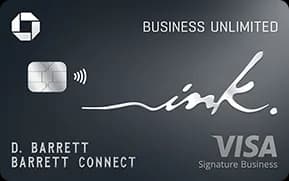
Chase Ink Business Unlimited
4.5
Best for: Businesses wanting simple flat-rate rewards
$0
1.5%
cashback
$750 value
Annual Fee
$0
Rewards
1.5%
Intro Offer
$750 value
American Express
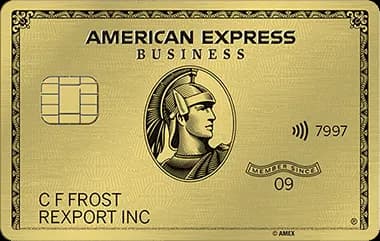
American Express Business Gold
4.4
Best for: Businesses with variable top spending categories
$295
1x–4x
points
$1,000 value
Annual Fee
$295
Rewards
1x–4x
Intro Offer
$1,000 value
Not sure which card is right for you?
Answer 5 quick questions — we'll match you with your best card.
American Express
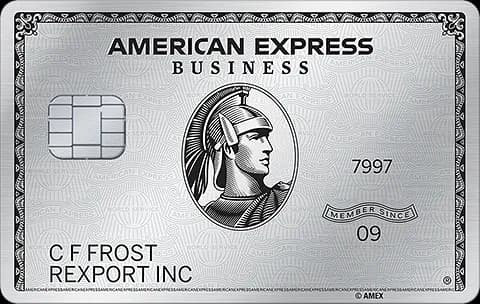
American Express Business Platinum
4.3
Best for: Executives with heavy business travel and large purchases
$695
1x–5x
points
$1,500 value
Annual Fee
$695
Rewards
1x–5x
Intro Offer
$1,500 value

Capital One
Capital One Spark Cash Plus
4.5
Best for: High-spending businesses wanting simple flat-rate rewards
$150
2%–5%
cashback
$1,200 value
Annual Fee
$150
Rewards
2%–5%
Intro Offer
$1,200 value
American Express
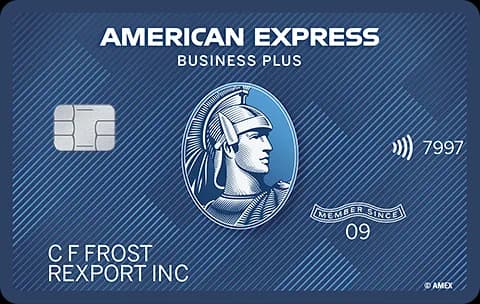
American Express Blue Business Plus
4.5
Best for: Small business owners who want no-fee Membership Rewards
$0
1x–2x
points
$150 value
Annual Fee
$0
Rewards
1x–2x
Intro Offer
$150 value
Brex
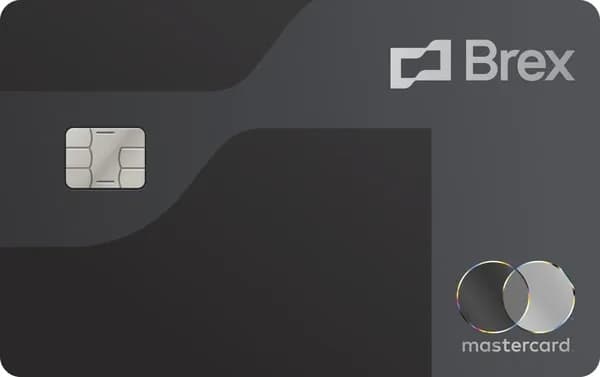
Brex Card
4.3
Best for: Funded startups and tech companies
$0
1x–8x
points
$1,100 value
Annual Fee
$0
Rewards
1x–8x
Intro Offer
$1,100 value
American Express
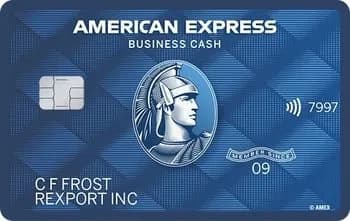
American Express Blue Business Cash Card
4.4
Best for: Business owners who prefer straightforward cash back
$0
1%–2%
cashback
$250 value
Annual Fee
$0
Rewards
1%–2%
Intro Offer
$250 value
Chase
Ink Business Premier Credit Card
4.2
Best for: Businesses with high per-transaction spending
$195
2%–2.5%
cashback
$1,000 value
Annual Fee
$195
Rewards
2%–2.5%
Intro Offer
$1,000 value

Capital One
Capital One Spark Cash Plus
4.3
Best for: High-spending businesses that want maximum flat-rate cashback
$150
2%
cashback
$1,200 value
Annual Fee
$150
Rewards
2%
Intro Offer
$1,200 value

Capital One
Capital One Spark Miles for Business
4.3
Best for: Business travelers wanting simple flat miles
$95
Waived 1st yr
2x–5x
miles
$500 value
Annual Fee
$95
Rewards
2x–5x
Intro Offer
$500 value
Bank of America
Bank of America Business Advantage Cash Rewards
4.2
Best for: Small businesses banking with Bank of America
$0
1%–3%
cashback
$300 value
Annual Fee
$0
Rewards
1%–3%
Intro Offer
$300 value

Ramp
Ramp Corporate Card
4.4
Best for: Growing companies that want expense management + cashback
$0
1.5%
cashback
N/A
Annual Fee
$0
Rewards
1.5%
Intro Offer
N/A
Bank of America
Business Advantage Unlimited Cash Rewards
4.2
Best for: Bank of America business customers who want simple cashback
$0
1.5%
cashback
$300 value
Annual Fee
$0
Rewards
1.5%
Intro Offer
$300 value
Comparing the best cards
| Credit Card | Best For | Annual Fee | Rewards | Intro Offer | Rating |
|---|---|---|---|---|---|
| Chase Ink Business Preferred Chase | Growing businesses with travel and advertising expenses | $95 | 1x–3x | $1,125 value | 4.7 |
| Chase Ink Business Cash Chase | Small businesses with high office supply & telecom spend | $0 | 1%–5% | $750 value | 4.6 |
| Chase Ink Business Unlimited Chase | Businesses wanting simple flat-rate rewards | $0 | 1.5% | $750 value | 4.5 |
| American Express Business Gold American Express | Businesses with variable top spending categories | $295 | 1x–4x | $1,000 value | 4.4 |
| American Express Business Platinum American Express | Executives with heavy business travel and large purchases | $695 | 1x–5x | $1,500 value | 4.3 |
| Capital One Spark Cash Plus Capital One | High-spending businesses wanting simple flat-rate rewards | $150 | 2%–5% | $1,200 value | 4.5 |
| American Express Blue Business Plus American Express | Small business owners who want no-fee Membership Rewards | $0 | 1x–2x | $150 value | 4.5 |
| Brex Card Brex | Funded startups and tech companies | $0 | 1x–8x | $1,100 value | 4.3 |
| American Express Blue Business Cash Card American Express | Business owners who prefer straightforward cash back | $0 | 1%–2% | $250 value | 4.4 |
| Ink Business Premier Credit Card Chase | Businesses with high per-transaction spending | $195 | 2%–2.5% | $1,000 value | 4.2 |
| Capital One Spark Cash Plus Capital One | High-spending businesses that want maximum flat-rate cashback | $150 | 2% | $1,200 value | 4.3 |
| Capital One Spark Miles for Business Capital One | Business travelers wanting simple flat miles | $95(waived yr 1) | 2x–5x | $500 value | 4.3 |
| Bank of America Business Advantage Cash Rewards Bank of America | Small businesses banking with Bank of America | $0 | 1%–3% | $300 value | 4.2 |
| Ramp Corporate Card Ramp | Growing companies that want expense management + cashback | $0 | 1.5% | — | 4.4 |
| Business Advantage Unlimited Cash Rewards Bank of America | Bank of America business customers who want simple cashback | $0 | 1.5% | $300 value | 4.2 |
Head-to-Head Comparisons
Chase Ink Business Preferred vs American Express Business Gold
Winner: Chase Ink Business Preferred — Much lower annual fee with strong 3x categories
American Express Blue Business Plus vs Chase Ink Business Unlimited
Winner: American Express Blue Business Plus — Higher 2x earning rate for most small business spending levels
Chase Ink Business Preferred vs Chase Ink Business Cash
Winner: Chase Ink Business Preferred — Transfer partners and higher cap make it more valuable for most businesses
Brex Card vs Ramp Corporate Card
How We Ranked These Cards
Business cards are ranked on earning rate on common business expenses like advertising, shipping, software, and office supplies (30%), sign-up bonus value (20%), expense management tools (15%), employee card options (10%), annual fee value (15%), and credit reporting — whether the card reports to personal credit bureaus (10%).
We model a small business spending $5,000/month: $1,500 on advertising/SaaS, $500 on travel, $400 on dining/client meals, $300 on shipping, $200 on office supplies, and $2,100 on other expenses. Business cards that don't report to personal credit bureaus (most Amex and Capital One business cards) are preferred for managing personal credit utilization.
What You Need to Know
Business credit cards offer advantages that personal cards simply cannot match, starting with the most practical: clean separation of expenses. Tax time becomes dramatically simpler when every business purchase sits on a dedicated card with year-end summaries, category breakdowns, and direct integration with accounting software like QuickBooks, Xero, and FreshBooks. For freelancers and small business owners, this separation isn't just convenient — it's essential for accurate deduction tracking and audit protection.
Higher credit limits and larger sign-up bonuses are standard features of business cards that fly under the radar. The Chase Ink Business Preferred regularly offers 100,000 Ultimate Rewards points (worth $1,250+) vs. 60,000-75,000 for the Sapphire Preferred. The Amex Business Gold offers 70,000-100,000 MR points. Credit limits of $10,000-$50,000+ are common for business cards, compared to $5,000-$15,000 on personal cards — giving you more spending power and lower utilization ratios.
The personal credit impact question is the most misunderstood aspect of business cards. While every business card application triggers a hard inquiry on your personal credit, most issuers (Amex, Capital One, Barclays) do not report ongoing balances to personal credit bureaus. This means a $20,000 balance on your Amex Business Gold won't increase your personal utilization ratio. Chase is the exception — they report the credit limit but not balances. This distinction matters enormously for anyone managing their personal credit score while running a business.
The 5/24 workaround is a key strategic consideration. Chase's 5/24 rule counts personal cards from all issuers opened in the past 24 months — but most business cards from Amex, Capital One, and Barclays do not count toward this limit. Savvy applicants open business cards from non-Chase issuers to earn bonuses and rewards without burning a 5/24 slot, preserving their eligibility for Chase personal cards.
The optimal business card portfolio for a typical small business ($5,000-$10,000/month spending) includes three cards: the Chase Ink Business Preferred for 3x on travel, shipping, internet, and advertising (up to $150K/year); the Amex Business Gold for 4x on your top two spending categories; and a no-fee card like the Chase Ink Business Unlimited (1.5x on everything) for non-bonus spending. This combination maximizes earning across all common business expense categories while keeping fee overhead manageable.
Expert Tips
Business card sign-up bonuses are typically 50-100% larger than personal cards
The Chase Ink Business Preferred regularly offers 100,000 points ($1,250+ value) vs. 60,000 for the Sapphire Preferred. If you have any business income — even freelancing, eBay sales, or consulting — you likely qualify for a business card.
You don't need an LLC to get a business credit card
Sole proprietors, freelancers, and side hustlers all qualify. Apply using your SSN as the business tax ID, your name as the business name, and your estimated annual revenue. Most issuers accept self-employment income and don't require formal business documentation.
Use a separate business card for clean expense tracking
Mixing personal and business expenses on one card creates tax headaches. A dedicated business card gives you clean statements for expense reports, tax deductions, and accounting. Many business cards integrate directly with QuickBooks and Xero.
Common Mistakes to Avoid
Not applying because you think you need a 'real' business
You don't need an LLC, EIN, or formal business registration. Sole proprietors — including freelancers, Etsy sellers, Uber drivers, and anyone with side income — qualify by applying with their SSN and personal name as the business name. Issuers accept annual revenue as low as $1,000.
Mixing business and personal expenses on one card
It feels simpler to use one card for everything, but it creates a tax documentation nightmare. If audited, the IRS expects clear separation between personal and business purchases. Commingled expenses on a single card require manual line-by-line categorization — costing hours and increasing error risk.
Ignoring employee card bonus earning potential
Most business cards let you add employee cards at no extra cost, and all their spending earns points on your account. If employees collectively spend $2,000/month on the Ink Business Preferred's 3x categories, that's 72,000 extra points/year ($900+ value) you'd otherwise miss.
Frequently Asked Questions
What is the best business credit card for small businesses?▾
The Chase Ink Business Preferred (3x on travel, shipping, internet, phone, and advertising up to $150K/year) and Amex Business Gold (4x on top 2 spending categories) are the top picks for most small businesses. For simplicity, the Chase Ink Business Unlimited earns 1.5x on everything with no annual fee.
Do business credit cards affect personal credit?▾
The initial application triggers a hard inquiry on your personal credit. After that, most business cards (Amex, Capital One, Barclays) only report to business credit bureaus. Chase business cards report the credit limit but not individual balances to personal reports. Only a default would impact your personal score with most issuers.
Can I use a business card for personal expenses?▾
Technically yes — issuers don't monitor individual transactions. However, mixing personal and business expenses complicates tax reporting and could create issues in an audit. Best practice is to keep business and personal spending on separate cards.
More Best Card Lists
Travel Credit CardsCash Back Credit CardsCredit Cards for DiningNo Annual Fee Credit CardsRewards Credit CardsBalance Transfer CardsStudent Credit CardsCards with No Foreign Transaction FeesSecured Credit CardsCredit Cards for Bad Credit0% APR Credit CardsCredit Cards for GasCredit Cards for GroceriesFlat-Rate Cash Back CardsPremium Credit CardsHotel Credit CardsAirline Credit CardsCredit Cards for MilitaryCredit Cards for FamiliesCredit Cards for Rent PaymentsCredit Cards for Subscriptions & StreamingLuxury Credit CardsCredit Cards for BeginnersCredit Cards for Online ShoppingCrypto & Fintech Credit CardsSmall Business Credit CardsCredit Cards for Bills & UtilitiesFirst Credit CardsHigh Credit Limit CardsCredit Cards for AmazonCredit Cards for CostcoCredit Cards for Self-EmployedCredit Card Sign-Up BonusesCredit Cards for International TravelCredit Cards for Excellent CreditCredit Cards for Good CreditCredit Cards for Fair CreditVisa Credit CardsMastercard Credit CardsAmerican Express CardsCredit Cards for U.S. NewcomersCredit Cards with Free FICO ScoreCredit Cards for Apple Pay & ContactlessMetal Credit CardsCredit Cards from Online Banks & FintechsCredit Cards with No Credit CheckInstant Approval Credit Cards