Best Premium Credit Cards (April 2026)
Top-tier cards with the most valuable perks and rewards
Premium cards come with annual fees of $250 or more — but the best ones deliver far more value than they cost. Think airport lounge access, annual travel credits, elite hotel status, and the highest rewards rates available. These are the cards that pay for themselves if you use the perks.
Reviewed by CardCompare Editorial Board
|CFP-reviewed|Updated April 20269 cards foundUpdated March 2026
Credit Card
Annual Fee
Rewards Rate
Intro Offer
BEST PREMIUM CREDIT CARDS

Capital One
Capital One Venture X Rewards
4.8
Best for: Premium travelers seeking maximum value
$395
2x–10x
miles
$750 value
Annual Fee
$395
Rewards
2x–10x
Intro Offer
$750 value
Editor's Pick9/10 score

Chase
Chase Sapphire Reserve
4.5
Best for: Frequent luxury travelers
$550
1x–10x
points
$900 value
Annual Fee
$550
Rewards
1x–10x
Intro Offer
$900 value
Editor's Pick9/10 score

American Express
American Express Gold Card
4.6
Best for: Foodies and grocery shoppers
$250
1x–4x
points
$600 value
Annual Fee
$250
Rewards
1x–4x
Intro Offer
$600 value
American Express
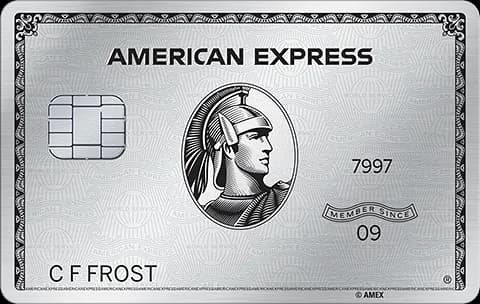
American Express Platinum
4.4
Best for: Ultra-frequent travelers who can maximize credits
$695
1x–5x
points
$800 value
Annual Fee
$695
Rewards
1x–5x
Intro Offer
$800 value
Not sure which card is right for you?
Answer 5 quick questions — we'll match you with your best card.

American Express
American Express Business Gold
4.4
Best for: Businesses with variable top spending categories
$295
1x–4x
points
$1,000 value
Annual Fee
$295
Rewards
1x–4x
Intro Offer
$1,000 value
American Express
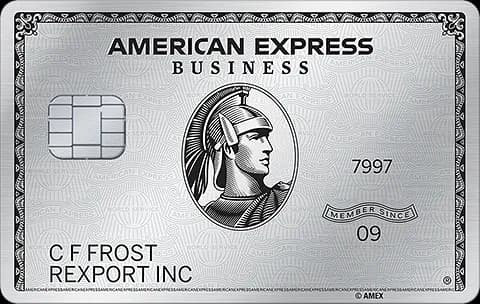
American Express Business Platinum
4.3
Best for: Executives with heavy business travel and large purchases
$695
1x–5x
points
$1,500 value
Annual Fee
$695
Rewards
1x–5x
Intro Offer
$1,500 value

U.S. Bank
U.S. Bank Altitude Reserve Visa Infinite
4.3
Best for: Mobile payment users wanting premium travel perks
$400
1x–5x
points
$750 value
Annual Fee
$400
Rewards
1x–5x
Intro Offer
$750 value

American Express
Delta SkyMiles Platinum American Express Card
4.2
Best for: Frequent Delta flyers who travel with a companion
$350
1x–3x
miles
$900 value
Annual Fee
$350
Rewards
1x–3x
Intro Offer
$900 value

Chase
United Quest Card
4.2
Best for: United flyers who book award flights and check bags
$250
1x–3x
miles
$600 value
Annual Fee
$250
Rewards
1x–3x
Intro Offer
$600 value
Comparing the best cards
| Credit Card | Best For | Annual Fee | Rewards | Intro Offer | Rating |
|---|---|---|---|---|---|
| Capital One Venture X Rewards Capital One | Premium travelers seeking maximum value | $395 | 2x–10x | $750 value | 4.8 |
| Chase Sapphire Reserve Chase | Frequent luxury travelers | $550 | 1x–10x | $900 value | 4.5 |
| American Express Gold Card American Express | Foodies and grocery shoppers | $250 | 1x–4x | $600 value | 4.6 |
| American Express Platinum American Express | Ultra-frequent travelers who can maximize credits | $695 | 1x–5x | $800 value | 4.4 |
| American Express Business Gold American Express | Businesses with variable top spending categories | $295 | 1x–4x | $1,000 value | 4.4 |
| American Express Business Platinum American Express | Executives with heavy business travel and large purchases | $695 | 1x–5x | $1,500 value | 4.3 |
| U.S. Bank Altitude Reserve Visa Infinite U.S. Bank | Mobile payment users wanting premium travel perks | $400 | 1x–5x | $750 value | 4.3 |
| Delta SkyMiles Platinum American Express Card American Express | Frequent Delta flyers who travel with a companion | $350 | 1x–3x | $900 value | 4.2 |
| United Quest Card Chase | United flyers who book award flights and check bags | $250 | 1x–3x | $600 value | 4.2 |
Head-to-Head Comparisons
Capital One Venture X Rewards vs Chase Sapphire Reserve
Winner: Capital One Venture X Rewards — Lower effective cost with comparable premium perks
American Express Platinum vs Capital One Venture X Rewards
Winner: Capital One Venture X Rewards — Much better value — comparable perks at a significantly lower cost
American Express Gold Card vs Chase Sapphire Reserve
Chase Sapphire Reserve vs American Express Platinum
Winner: Chase Sapphire Reserve — Better value for most people with lower fee and stronger everyday earning
How We Ranked These Cards
Premium cards are ranked on total annual benefit value (30%), lounge access quality and network (20%), travel credits and statement credits (15%), insurance and protection suite (15%), earning rate on premium spending categories (10%), and annual fee relative to benefits (10%).
We calculate net annual value by summing all usable credits and perks, then subtracting the annual fee. For the Chase Sapphire Reserve: $300 travel credit + $50 hotel credit + ~$400 in lounge visits (12 visits × $33 average value) + travel insurance value (~$200) = $950 in benefits minus $550 fee = $400 net positive.
The key qualifier is 'usable.' We discount credits at merchants a typical premium cardholder would not visit. A $200 airline fee credit has full value for frequent flyers but $0 value for someone who flies once a year.
What You Need to Know
Premium credit cards with annual fees of $395-695 have become mainstream, with millions of Americans now carrying the Chase Sapphire Reserve, Amex Platinum, or Capital One Venture X. The appeal is straightforward: automatic travel credits, airport lounge access, comprehensive insurance, and elevated earning rates that collectively deliver far more value than the annual fee — provided you actually use the benefits. The gap between "on paper" value and "real-world" value is where most consumers get the math wrong.
The Capital One Venture X has disrupted the premium space by offering the lowest effective annual cost. At $395/year with an automatic $300 annual travel credit, the effective cost is just $95 — yet the card includes Priority Pass lounge access, Capital One lounge access (Dallas and Denver, with more opening), 10x miles on hotels and rental cars through Capital One Travel, and 2x on everything else. For moderate travelers who take 3-5 trips per year, the Venture X delivers better value than the more expensive Amex Platinum ($695) or Chase Sapphire Reserve ($550).
The Amex Platinum justifies its $695 fee through Centurion lounges, which are objectively the best airport lounges available to any credit card holder — craft cocktails, chef-prepared meals, spa services, and an upscale atmosphere that Priority Pass lounges cannot match. With 18+ US locations and international expansion underway, the Centurion network covers most major hubs. Add the $200 airline fee credit, $200 hotel credit, $200 Uber credit, $155 Walmart+ credit, $189 Clear Plus credit, and $100 Saks credit, and the total credit value exceeds $1,000. The catch: you must actively use all these credits at these specific merchants.
The Chase Sapphire Reserve wins on transfer partner value. Its 3x on dining and travel translates to 4.5+ cents per dollar when transferred to Hyatt (the single most valuable transfer partner in the industry). The $300 automatic travel credit, Priority Pass, and the best travel insurance suite among consumer cards (trip cancellation, trip delay, car rental CDW, emergency medical) make the Reserve the best premium card for travelers who optimize points. The decision between Venture X, Platinum, and Reserve ultimately depends on whether you value low cost, lounge quality, or transfer partner flexibility.
Expert Tips
Premium cards pay for themselves only if you use the perks
A $695 Amex Platinum is worth $1,500+ in perks — but only if you actually use Centurion lounges, the $200 airline fee credit, $200 hotel credit, $200 Uber credit, and $155 Walmart+ credit. If you would not naturally use half these benefits, the card costs you money despite its 'value.'
Compare net cost, not sticker price
The Chase Sapphire Reserve costs $550/year but includes a $300 automatic travel credit, bringing the effective cost to $250. The Capital One Venture X costs $395 but includes a $300 travel credit — effective cost $95. Compare cards on effective annual cost after credits you will actually use.
Priority Pass vs Centurion vs Capital One lounges
Priority Pass (included with CSR and Venture X) has 1,400+ lounges globally but quality varies wildly. Amex Centurion lounges (Platinum only) have fewer locations but premium food and drinks. Capital One lounges are newest and impressive but only in Dallas and Denver so far. Consider which network covers your home airport.
Common Mistakes to Avoid
Paying the annual fee without using statement credits
The Amex Platinum offers $1,000+ in annual credits — but across 8+ different merchants. If you don't use Uber ($200), Saks ($100), your airline ($200), hotels ($200), Walmart+ ($155), and Clear ($189), the card's effective cost approaches or exceeds its fee. Before applying, honestly assess which credits align with your existing spending. Unused credits are worth exactly $0.
Choosing a premium card based on prestige rather than utility
The Amex Platinum is the most recognized premium card, but if you don't travel near Centurion lounges and won't use the credits, the Capital One Venture X at $95 effective cost delivers better value. A $695 card that you use 30% of is worse than a $95 effective-cost card you use 100% of. Match the card to your lifestyle, not your aspirations.
Overlooking the insurance and protection benefits
Premium cards include travel insurance worth $500-2,000+ per incident — trip cancellation, trip delay, lost luggage, rental car collision coverage, and emergency medical evacuation. Many holders never file claims because they don't know these benefits exist. A single trip cancellation claim ($5,000-10,000 coverage) can justify years of annual fees. Read your card's benefits guide thoroughly.
Frequently Asked Questions
Are premium credit cards worth the high annual fee?▾
For frequent travelers, yes. The Chase Sapphire Reserve ($550/yr) provides $300 in travel credits, Priority Pass lounge access, and exceptional travel insurance. After credits, the effective cost is $250 for hundreds of dollars in lounge visits, rental car insurance, and trip protection. The break-even point is typically 3-4 trips per year.
What is the best premium travel credit card?▾
The Capital One Venture X offers the best value at $395/year with a $300 travel credit (effective cost: $95), Priority Pass and Capital One lounge access, 2x miles on everything, and 10x on hotels via Capital One Travel. The Amex Platinum ($695) has the best lounge network with Centurion access. The Chase Sapphire Reserve ($550) has the best transfer partner ecosystem.
What credit score do I need for a premium credit card?▾
Premium cards typically require excellent credit — a FICO score of 740 or higher. Some applicants are approved with scores as low as 720 if they have high income and low existing debt. The application will also consider your income, existing credit card relationships, and overall credit profile, not just the score.
More Best Card Lists
Travel Credit CardsCash Back Credit CardsCredit Cards for DiningNo Annual Fee Credit CardsRewards Credit CardsBalance Transfer CardsStudent Credit CardsCards with No Foreign Transaction FeesBusiness Credit CardsSecured Credit CardsCredit Cards for Bad Credit0% APR Credit CardsCredit Cards for GasCredit Cards for GroceriesFlat-Rate Cash Back CardsHotel Credit CardsAirline Credit CardsCredit Cards for MilitaryCredit Cards for FamiliesCredit Cards for Rent PaymentsCredit Cards for Subscriptions & StreamingLuxury Credit CardsCredit Cards for BeginnersCredit Cards for Online ShoppingCrypto & Fintech Credit CardsSmall Business Credit CardsCredit Cards for Bills & UtilitiesFirst Credit CardsHigh Credit Limit CardsCredit Cards for AmazonCredit Cards for CostcoCredit Cards for Self-EmployedCredit Card Sign-Up BonusesCredit Cards for International TravelCredit Cards for Excellent CreditCredit Cards for Good CreditCredit Cards for Fair CreditVisa Credit CardsMastercard Credit CardsAmerican Express CardsCredit Cards for U.S. NewcomersCredit Cards with Free FICO ScoreCredit Cards for Apple Pay & ContactlessMetal Credit CardsCredit Cards from Online Banks & FintechsCredit Cards with No Credit CheckInstant Approval Credit Cards